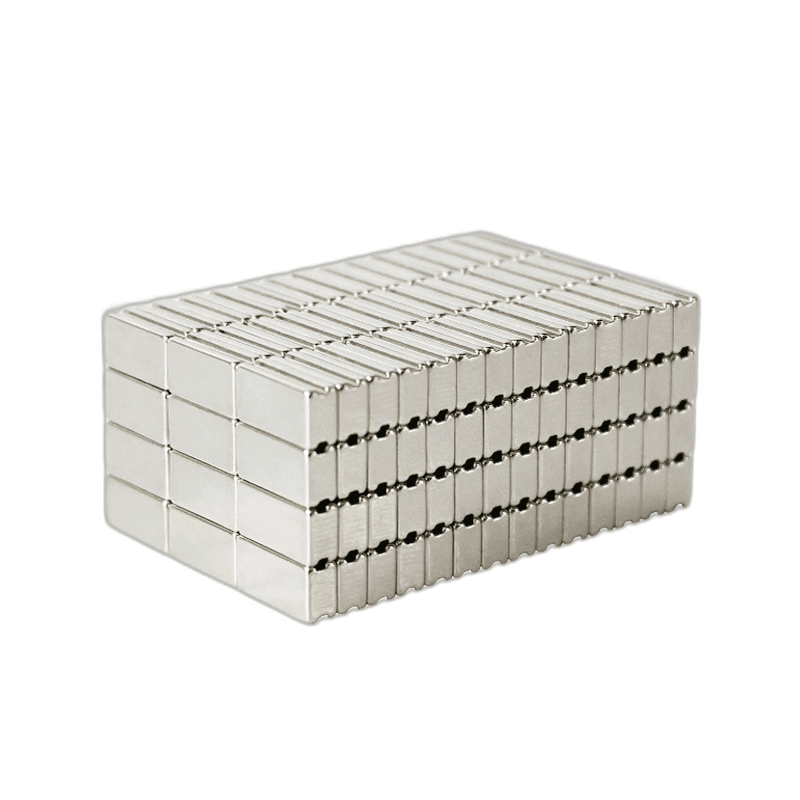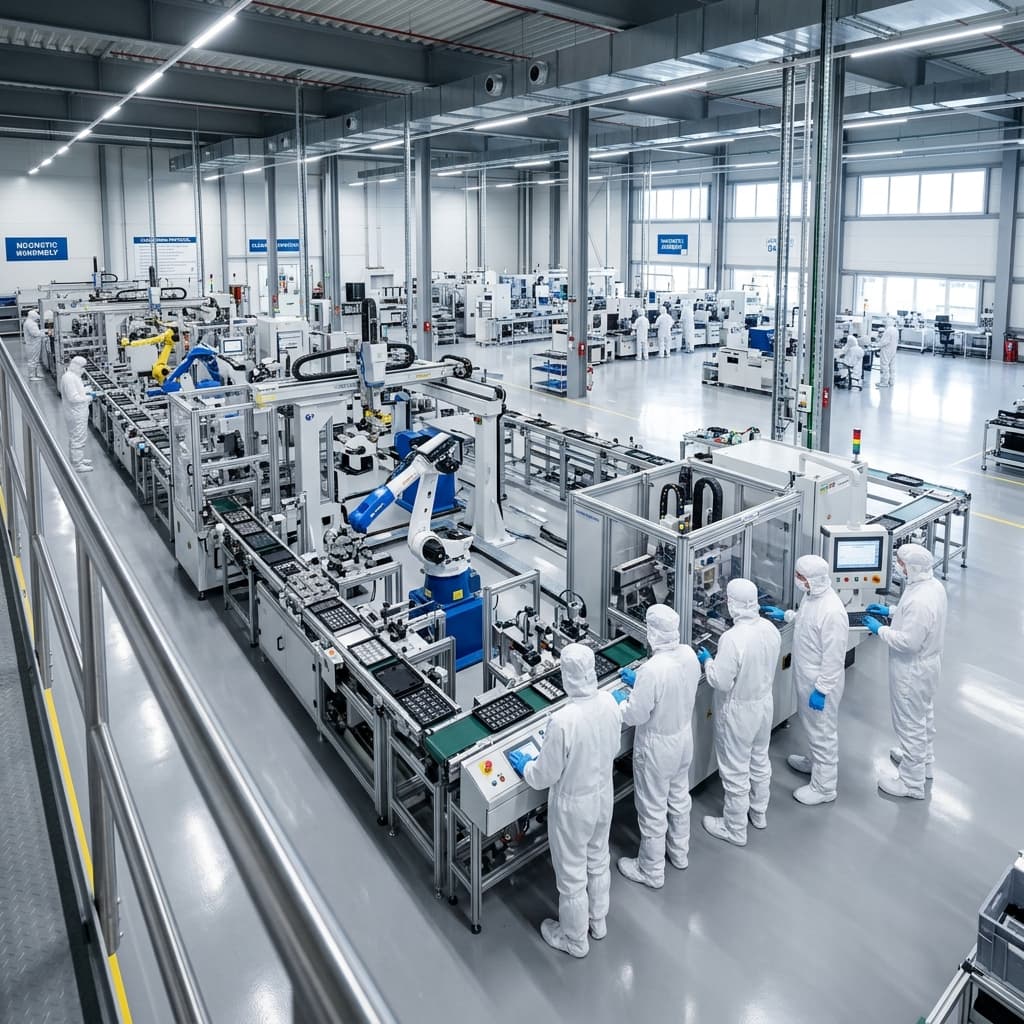
For applications in medical devices, food processing equipment, subsea exploration, and aerospace, standard conformal coatings (like Parylene or Epoxy) or simple resin potting are insufficient. These aggressive environments demand IP69K protection or true hermetic sealing, achievable only through full metal encapsulation. When you put a neodymium (NdFeB) magnet inside a stainless steel or titanium housing, you must permanently seal it to prevent moisture, corrosive fluids, or high-pressure steam from destroying the magnet.
However, welding a metal sleeve over an NdFeB magnet introduces a critical engineering and manufacturing risk: heat. NdFeB magnets are highly sensitive to thermal stress, and excessive heat input during the welding process will cause irreversible demagnetization.
This guide explores how to balance hermeticity, manufacturing cost, and magnetic performance by choosing the right welding process for your custom magnetic assemblies. By understanding the physics of heat input and the capabilities of Laser Beam Welding (LBW) versus Tungsten Inert Gas (TIG) welding, procurement teams and engineers can make better sourcing decisions, avoid costly design-for-manufacturability (DFM) failures, and select the right supplier for extreme-environment magnetic assemblies.
Published for global OEM engineering and sourcing teams on 2026-07-25. Scope: welded stainless steel or titanium encapsulation for NdFeB and SmCo custom magnetic assemblies that need IP69K washdown resistance, helium leak validation, or true gas-tight hermeticity. Limits: this is a DFM and supplier-screening guide, not a substitute for application-specific welding trials, post-weld flux testing, leak-rate qualification, or the current standards required by your regulated market.
If you are still deciding whether welded metal encapsulation is necessary, compare this route with overmolding vs potting for IP68 magnetic assemblies. If the sealing method is already fixed, use the custom magnetic assembly RFQ checklist before sending drawings for engineering review.
1. The NdFeB Thermal Challenge: Why Heat is the Enemy
The primary challenge in hermetically sealing a magnet via welding is managing the Heat-Affected Zone (HAZ).
1.1 The Mechanics of Demagnetization
Standard neodymium (NdFeB) grades (e.g., N42, N45) begin suffering irreversible flux loss at temperatures as low as 80°C to 120°C. Even high-temperature grades (e.g., N42SH, N38UH) begin to permanently degrade above 150°C to 180°C. This degradation occurs well below the Curie temperature (which is typically around 310°C to 340°C for NdFeB).
If the welding process penetrates too deeply or conducts heat too slowly across the encapsulation sleeve, the outer surface of the magnet will exceed its intrinsic coercivity threshold. The result is permanent demagnetization, reducing the assembly's overall holding force, sensor actuation distance, or torque output.
1.2 The Heat-Affected Zone (HAZ)
In welding, the HAZ is the area of the base metal that has not been melted but has had its microstructure and properties altered by the heat of welding. When welding a 0.2mm to 1.0mm thick sleeve over a magnet, the HAZ acts as a thermal bridge. If the HAZ is wide and deep, the thermal energy will transfer directly into the NdFeB material. Therefore, the core objective in magnetic assembly encapsulation is to use a welding process with the narrowest possible HAZ and the fastest possible cooling rate.
2. Laser Welding vs. TIG Welding Comparison
When specifying the encapsulation of a magnetic rotor, pump coupling, or sensor target, the two most common processes evaluated by contract manufacturers are Laser Beam Welding (LBW) and Tungsten Inert Gas (TIG) welding.
TIG Welding (GTAW)
TIG (Tungsten Inert Gas), also known as Gas Tungsten Arc Welding (GTAW), is a traditional, widely available arc welding process. It uses a non-consumable tungsten electrode to produce the weld.
- The Process: An electrical arc is struck between the tungsten electrode and the workpiece, melting the base metal to form a weld pool.
- The Advantages: It is highly cost-effective to set up, requires minimal capital equipment expenditure compared to laser welding, and is highly flexible for large, thick-walled assemblies (like massive pump rotors or wind turbine generator segments).
- The Risk to Magnets: TIG transfers a massive amount of total heat energy into the workpiece. The weld pool is relatively wide, and the welding speed is slow. The HAZ is very broad. Unless the encapsulation wall is very thick (acting as a thermal buffer) or aggressive active cooling (like water-chilled fixtures) is applied, TIG welding will frequently demagnetize the underlying NdFeB magnet. TIG is generally unsuitable for thin-walled (under 1.0mm) precision encapsulation.
Laser Welding (LBW)
Laser welding uses a highly focused, high-energy light beam to melt and fuse the metals. It completes the weld in milliseconds.
- The Process: A solid-state (Nd:YAG) or fiber laser is focused onto the seam. The energy density is so high that it creates a "keyhole" effect, melting the metal instantly while moving rapidly along the joint.
- The Advantages: The heat input is extremely localized. The HAZ is narrow and shallow, allowing thin-walled stainless steel or titanium (e.g., 0.1mm - 0.5mm) to be welded directly over a magnet without raising the bulk temperature of the magnet above its damage threshold. It is the gold standard for miniature medical implants, aerospace sensors, and high-speed IP69K motor rotors.
- The Drawbacks: High capital equipment costs. The joint fit-up must be nearly perfect (gaps larger than 10% of the material thickness can cause weld failure), requiring precision CNC machining of the encapsulation sleeve prior to welding.
Welding Process Tradeoffs for Magnetic Assemblies
3. Advanced Sourcing: Electron Beam Welding (EBW)
While Laser and TIG are the most common, Electron Beam Welding (EBW) is a third option utilized for extreme high-reliability applications (like space exploration or military avionics).
EBW uses a focused beam of high-velocity electrons. Like laser welding, it provides an exceptionally narrow HAZ and very deep penetration. The major differentiator is that EBW must be performed in a hard vacuum.
- The Sourcing Impact: Because it requires a vacuum chamber, EBW cycle times are very long (due to pump-down time), and the equipment is incredibly expensive. However, welding in a vacuum ensures zero oxidation and absolute purity in the weld seam, which is critical for highly reactive metals like Titanium (often used in medical implants).
- The Physics Impact: Sealing a magnet in a hard vacuum means the interior of the encapsulated assembly will also be a vacuum. This prevents internal corrosion and completely eliminates outgassing risks, but it comes at a premium cost.
4. Structural Comparison Matrix
To simplify the procurement decision, evaluate your project against this cost-performance matrix.
| Specification | Laser Welding (LBW) | TIG Welding (GTAW) | Electron Beam (EBW) |
|---|---|---|---|
| Heat-Affected Zone (HAZ) | Extremely narrow | Wide | Extremely narrow |
| Risk of NdFeB Demagnetization | Low | High | Very Low |
| Minimum Wall Thickness | ~0.10 mm | ~1.00 mm | ~0.05 mm |
| Atmosphere Requirement | Argon/Nitrogen shielding gas | Argon shielding gas | Hard Vacuum chamber |
| Capital & NRE Cost | Medium to High | Low | Very High |
| Typical OEM Applications | Medical implants, IP69K sensors | Large pump rotors, heavy industry | Aerospace, ultra-high vacuum |
| Cycle Time (Production) | Fast (milliseconds to seconds) | Slow (seconds to minutes) | Slow (due to vacuum pump-down) |
| Joint Fit-Up Tolerance | Extremely tight (<10% thickness) | Forgiving (can use filler wire) | Extremely tight |
5. DFM (Design for Manufacturability) Guidelines for Encapsulation
If you decide to proceed with laser welding for your hermetic assembly, the engineering drawing must reflect specific joint designs. You cannot simply hand a standard TIG-welded drawing to a laser welding supplier.
For the RFQ packet, treat these points as drawing requirements and supplier process controls. Pair them with the broader custom assembly specification guide so purchasing, design engineering, and supplier quality are reviewing the same acceptance evidence.
- Joint Design: Laser welding typically utilizes an autogenous (no filler wire) butt joint or a lap joint. The clearance between the sleeve and the end-cap must be virtually zero. An interference fit or a light press-fit before welding is often required. Any gap will cause the laser beam to simply pass through the joint rather than melting the edges together, resulting in a failed weld.
- Material Selection: Austenitic stainless steels like 304L and 316L are preferred. The "L" stands for Low Carbon (typically less than 0.03% carbon content). High carbon steels will experience carbide precipitation at the weld seam, leading to intergranular corrosion. For aerospace or medical, Titanium Grade 2 or Grade 5 is common, but requires meticulous shielding gas coverage to prevent embrittlement from oxygen or nitrogen absorption.
- Thermal Relief: Design a small air gap (even 0.1mm) between the inner wall of the encapsulation and the magnet near the weld seam. Air is a poor conductor of heat and acts as a localized insulator, further protecting the magnet during the laser pulse. Alternatively, a thin ceramic washer can be used as a thermal barrier between the weld zone and the magnetic material.
- Surface Finish and Cleanliness: The joint area must be completely free of oils, cutting fluids, and oxides prior to laser welding. Any contamination in the joint will instantly vaporize under the laser beam, creating porosity (pinholes) in the weld seam that will fail helium leak testing and compromise the IP69K rating.
6. Testing for IP69K vs True Hermeticity
A critical sourcing mistake is confusing IP69K with true hermetic sealing. They are not the same thing, and the testing methodologies are vastly different.
IP69K is defined by the ISO 20653 standard. It tests protection against high-pressure (80-100 bar), high-temperature (80°C) water jets at close range. An assembly can pass an IP69K test using a thick polymer overmolding (like Polyurethane or Silicone). However, all polymers are permeable to gases. Over years of deployment, moisture vapor will slowly diffuse through the polymer, eventually reaching the NdFeB magnet and causing it to rust, swell, and fail.
Hermetic Sealing means gas-tight. It is measured in leak rates (e.g., atm·cc/sec). True hermeticity requires metal-to-metal welding, glass-to-metal seals, or ceramic-to-metal seals.
If your application requires a 20-year lifespan in a subsea environment, or must survive the sterilization cycles of an autoclave, you must specify a Helium leak test, not just an IP69K washdown test.
The Helium Leak Test Process
To validate a hermetic seal, the assembly is placed in a vacuum chamber connected to a mass spectrometer. Helium gas is either pressurized inside the part before sealing, or sprayed on the outside of the part while a vacuum is pulled on the inside. Because Helium atoms are incredibly small, they will find their way through micro-cracks in the weld seam that would be entirely invisible to a standard bubble test or water pressure test. A typical pass criteria for a high-reliability medical implant is a leak rate of less than 1 x 10⁻⁸ atm·cc/sec.
7. Real-World Failure Case Studies
To understand the stakes of selecting the wrong welding process, consider these two real-world failure modes commonly encountered by OEM engineering teams:
Case Study 1: The Demagnetized Pump Rotor
An industrial pump manufacturer attempted to cost-reduce their magnetic drive coupling by switching from a laser-welded 0.3mm 316L sleeve to a TIG-welded 1.0mm sleeve. They assumed the thicker wall would provide enough thermal mass to protect the magnet from the TIG arc.
- The Result: The immense heat input of the slow TIG welding process saturated the 1.0mm sleeve and raised the surface temperature of the N40SH NdFeB magnet to over 200°C.
- The Failure: While the weld was mechanically sound and passed a pressure test, the assembly suffered a 35% loss in magnetic torque transmission due to irreversible demagnetization. The manufacturer was forced to revert to the laser welding process.
Case Study 2: The Pinhole Leak in a Corrosive Environment
A sensor manufacturer specified laser welding for a downhole drilling sensor but failed to enforce cleanliness standards with their supplier.
- The Result: Trace amounts of machining coolant were left inside the encapsulation joint prior to laser welding.
- The Failure: The coolant vaporized during the laser pulse, creating microscopic porosity in the weld seam. The assembly passed an initial IP68 water submersion test but failed a Helium leak test. After 3 months in the field exposed to drilling mud, the magnet oxidized, swelled, and cracked the sensor housing.
8. Supplier Quality and Sourcing Checklist
When selecting a contract manufacturer or supplier for hermetically sealed magnet assemblies, audit their capabilities against this strict checklist. A supplier that only makes standard magnets will likely fail at complex welded encapsulation.
Use this list alongside the global magnet supplier validation checklist and the OEM magnetic assembly quality control plan before First Article Inspection (FAI) is closed.
- Thermal Modeling Capabilities: Can the supplier simulate the HAZ using FEA software (like ANSYS) to predict the maximum temperature reached at the magnet surface during welding?
- Leak Testing Protocol: Do they use Helium mass spectrometry for fine leak testing (capable of detecting 10⁻⁸ atm·cc/sec), or only visual bubble testing (which is entirely insufficient for true hermetic validation)?
- Weld Penetration Validation: Are cross-sectional micrographic analyses provided during First Article Inspection (FAI) to verify exact weld depth, fusion zone shape, and lack of porosity?
- Post-Weld Magnetic Testing: Is 100% flux testing, Helmholtz coil testing, or surface gauss mapping performed after welding to definitively prove no thermal degradation occurred during the process?
- Shielding Gas Monitoring: For titanium laser welding, do they have continuous oxygen sensors inside the welding enclosure to ensure the Argon shielding gas remains below 10 ppm oxygen?
- Material Traceability: Is full mill cert traceability maintained for the encapsulation metals (e.g., 316L, Titanium Gr 5) to prevent corrosion failures from counterfeit or inferior alloys?
- Cleanroom Assembly: Is the final assembly and welding performed in a controlled environment to prevent dust and oil contamination from ruining the weld integrity?
9. Frequently Asked Questions (FAQ)
Q: Can we TIG weld an assembly if we use Samarium Cobalt (SmCo) instead of NdFeB?
A: SmCo has a much higher temperature tolerance (up to 300-350°C), making it significantly more resilient to the massive heat input of TIG welding. However, SmCo is an extremely brittle ceramic-like material. The severe thermal shock gradient from the welding arc can cause the magnet to crack internally, even if it does not demagnetize. For SmCo, slow pre-heating and post-weld stress relief cooling may be required if TIG welding is used; compare the magnetic tradeoffs in the SmCo vs NdFeB high-temperature assembly guide.
Q: What happens if a standard NdFeB magnet is exposed to moisture?
A: NdFeB contains iron, which oxidizes rapidly in the presence of oxygen and moisture. As it rusts, the material expands. In an encapsulated assembly that is not truly hermetic, this expansion will generate enormous internal pressure, eventually bursting the stainless steel sleeve or destroying the surrounding mechanism.
Q: Why does the sleeve material matter for the magnetic circuit?
A: Austenitic stainless steels (304L, 316L) are non-magnetic (paramagnetic). They act as an air gap in the magnetic circuit. The thicker the wall you need to survive TIG welding (to act as a thermal buffer), the larger this "air gap" becomes, which severely reduces the holding force or sensor actuation distance. Laser welding allows for walls as thin as 0.1mm, maximizing the magnetic performance while maintaining the seal.
Q: Are there alternatives to welding for hermetic sealing?
A: Yes, but with severe trade-offs. Brazing and soldering are possible but require heating the entire assembly in an oven, often exceeding the magnet's temperature limits. Adhesive bonding is never truly hermetic because polymers outgas and permit vapor transmission. Glass-to-metal seals are excellent but usually reserved for electrical feedthroughs (like pins on a sensor), not for encapsulating entire rotors or large magnets.
10. Conclusion and Next Steps
Specifying a hermetically sealed magnetic assembly requires bridging the gap between magnetic physics and metallurgical joining. While TIG welding is cheaper to set up and more forgiving of wide tolerances, its high heat input often destroys the very magnets it is meant to protect, necessitating thick, inefficient sleeve walls. Laser welding (LBW) requires higher upfront engineering, tighter machining tolerances, and greater capital investment, but its precise, low-heat profile makes it the definitive choice for high-performance, thin-walled IP69K assemblies.
When drafting your RFQ for a hermetic assembly, ensure you explicitly define:
- The maximum allowable flux loss post-welding.
- The required leak rate (e.g., Helium leak < 1x10⁻⁸ atm·cc/sec).
- The specific cross-sectional validation tests the supplier must perform during FAI.
11. Sources and References
- TWI Global: What is the Heat Affected Zone? - Definition of HAZ and why heat input changes base-metal properties around a weld.
- Joining Technologies: Laser Welding Advantages - Practical comparison of laser welding with GTAW and other conventional methods, including lower heat input and smaller HAZ.
- ISO 20653: Road vehicles - Degrees of protection - Official standard listing for IP code protection classes used when specifying IP69K-style washdown exposure.
- INFICON: Leak Testing Basics - Reference for helium leak testing and mass-spectrometer leak-detection practice.
- HS Magnetics: Maximum Working Temperature of Permanent Magnets - Supplier-side temperature guidance for NdFeB, SmCo, and other permanent magnet materials.
For DFM review on your hermetic magnet assembly drawings, contact our engineering team, email [email protected], or WhatsApp +8618857971991 (Open WhatsApp).