← Back to Products

Holding & Lifting Assemblies

Heavy-duty magnetic assemblies designed for repeatable holding performance, structural safety margin, and predictable maintenance behavior in industrial environments.
Target Buyer:Automation & Tooling Engineers
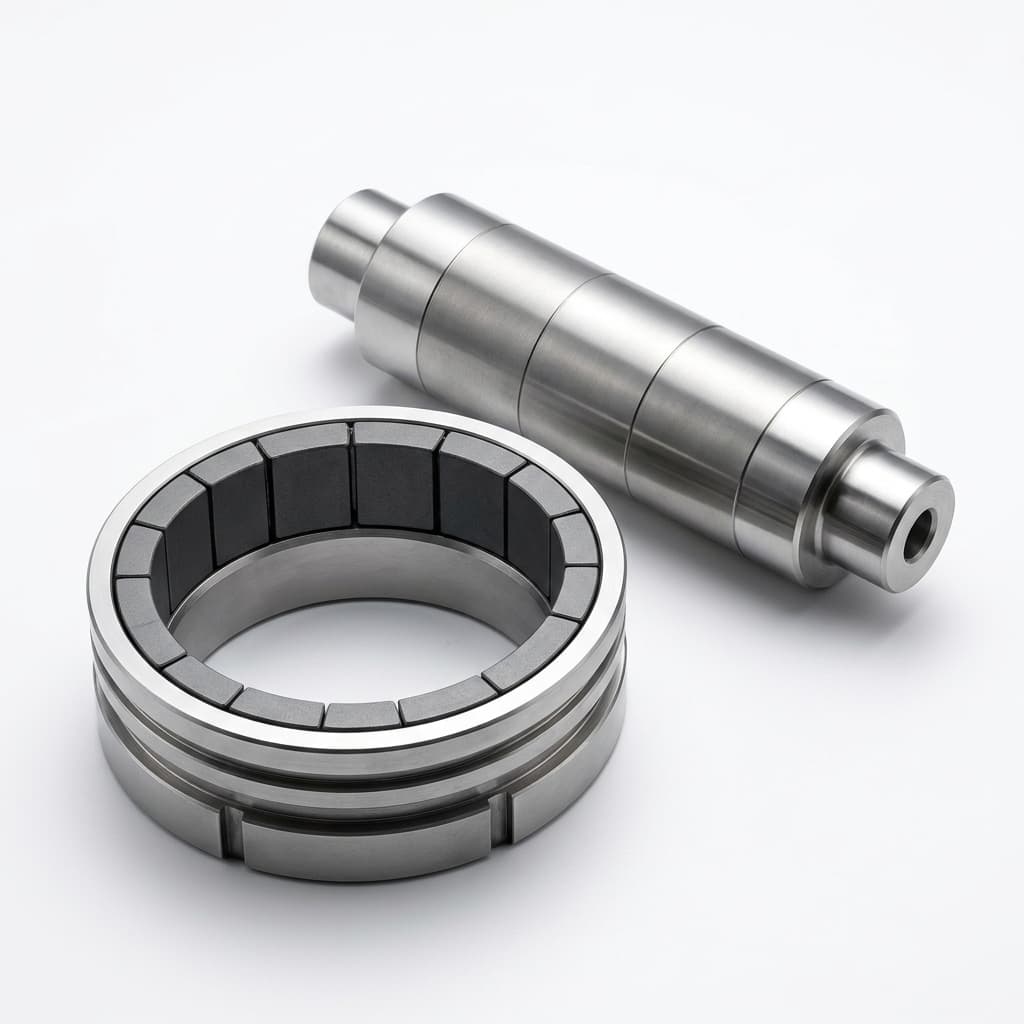
Steel Housing Magnet Assembly

Capability Highlights

  • Optimized magnetic circuit for force-to-size efficiency
  • Corrosion-resistant plating and coating options
  • High pull-force output with practical fixture integration
  • Shear-load aware design support for real installation geometry
  • Batch pull-test verification with traceable records

Typical Applications

  • Industrial lifting
  • Workholding fixtures
  • Automation effectors

Engineering Focus

  • Pull force optimization with installation constraints
  • Steel cup and flux path geometry refinement
  • Shear force resistance under dynamic movement
  • Surface condition sensitivity and contact reliability
  • Corrosion and environmental durability planning

Key Evaluation Matrix

MetricTypical RangeWhy It Matters
Pull Force1kg to 500kg+Defines lifting capacity
Force Retention After Corrosion CycleProject-defined acceptance thresholdIndicates whether long-term field performance will stay within safe limits
Shear StabilityApplication-specific verification resultPrevents slip or sudden release when lateral loads are present

RFQ Checklist

  1. Target pull force (kg)
  2. Operating orientation
  3. Surface coating requirements
  4. Contact surface condition (flatness, roughness, coating)
  5. Safety factor and maintenance interval expectations

Risk Controls

  • Corrosion in harsh environments: Ni-Cu-Ni plating or Epoxy coating
  • Force drop due to poor mating surface condition: Specify surface assumptions and validate on real mating material samples
  • Safety margin overestimation in dynamic applications: Define static vs dynamic acceptance separately and validate both in pilot stage

Pre-PO Validation Path

Before releasing tooling or annual-volume orders, align your supplier review on one measurable acceptance baseline, one practical pilot test method, and one signed risk-closure record. This removes ambiguity during engineering handoff and prevents quote-stage assumptions from leaking into production.

  1. Lock acceptance criteria around Pull Force and define who signs off at sample and pilot stages.
  2. Run pilot checks on Pull force optimization with installation constraints + Steel cup and flux path geometry refinement under your real duty-cycle conditions.
  3. Include Target pull force (kg), Operating orientation, Surface coating requirements in the first RFQ package to reduce back-and-forth loops.
  4. Capture closure evidence for Corrosion in harsh environments before approving mass-production release.

Product Gallery

Holding Assembly 1
Holding Assembly 1
Channel Magnet Assembly
Holding Assembly 2
Holding Assembly 2

Buyer FAQ

Do you test the pull force?

Yes, every batch undergoes strict pull force testing.

Can you support custom housings for fixtures or tools?

Yes. We support custom steel cup and housing structures to fit your mechanical interface and mounting constraints.

Do you provide recommendations for safety factor settings?

Yes. We can suggest verification structure for static and dynamic safety factors based on your load profile.

Related Resources

Instant Chat

+8618857971991

Direct response from our engineering team.