CapabilitiesOEM Engineering
Factory-side engineering and supply capability designed for global OEM projects, from prototype validation to mass production of custom magnetic circuits.
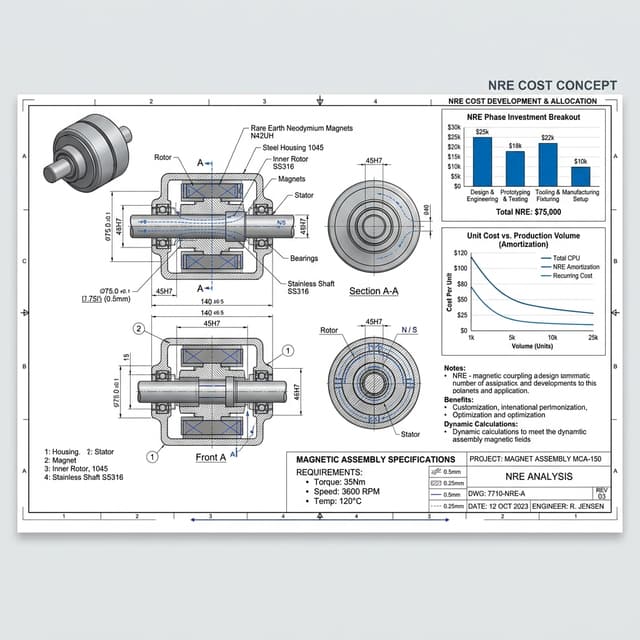
This section is organized around the buyer journey: requirement closure, DFM optimization, rapid prototyping, and NRE tooling strategies. Each topic includes practical control points for RFQ and PO governance.
DFM & Magnetic Circuit Design
Design-for-manufacturability and magnetic circuit optimization support that converts concept assumptions into production-feasible geometry, tolerances, and cost structure.
Target Buyer: R&D Teams & Product Managers
- 2D/3D FEA simulation
- Cost reduction analysis
- Tolerance review
View detailsRapid Prototyping
Fast-turnaround magnetic assembly prototypes designed to close technical risk early and transfer cleanly into production-intent execution.
Target Buyer: Prototyping & Innovation Engineers
- 5-7 day turnaround
- Production-intent materials
- Testing reports included
View detailsOEM Engagement Decision Framework
Use this framework to decide which capability should start first in your program. The right entry point depends on whether your main risk is design uncertainty, schedule pressure, or production transfer stability.
| Program Situation | Best Starting Capability | Expected Output |
|---|
| Spec uncertainty around magnetic path, materials, or stack tolerance. | DFM & Magnetic Circuit Design | Feasible geometry, tolerance priorities, and validation checkpoints before tooling decisions. |
| Tight launch window and need to verify technical feasibility quickly. | Rapid Prototyping | Short-cycle samples with measurable evidence for go/no-go pilot decisions. |
| Program is entering pilot or mass production and needs stable quality and delivery controls. | Combined DFM + Prototype Transfer Path | Locked acceptance criteria, controlled handoff package, and reduced rework risk during scale-up. |
In buyer-side execution, the highest ROI usually comes from defining measurable success criteria and evidence format before requesting quotations. This prevents quote-stage ambiguity and keeps engineering, procurement, and supplier teams aligned during program gates.